Water-Wise Irrigation: Water Less, Grow More
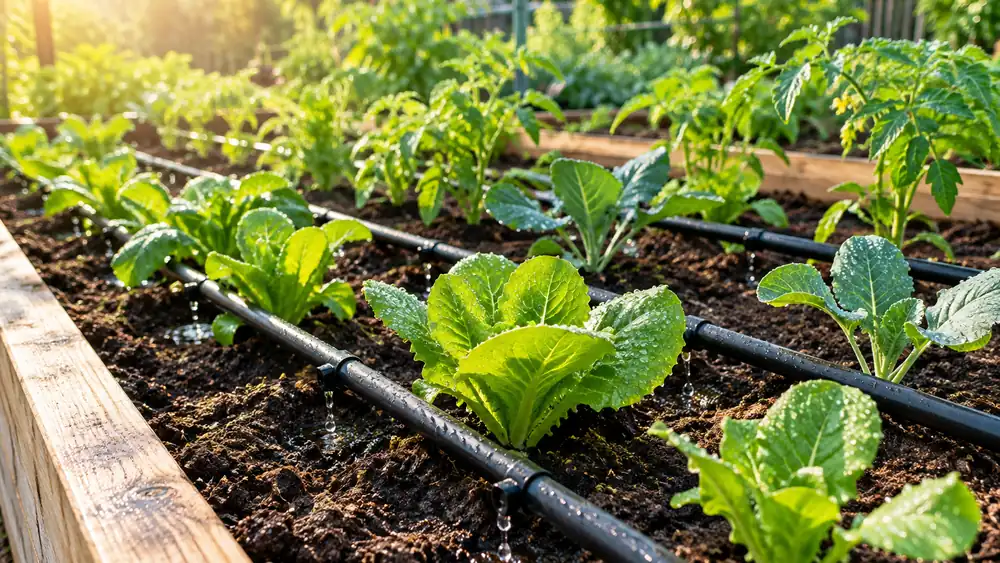
Sprinkling a garden from above - by hand or by sprinkler - wastes water in two ways: up to a third evaporates before it ever touches soil, and wet leaves are an open invitation to fungal disease. The fix is simple physics: deliver water at ground level, slowly, right where the roots are. That is what soaker hoses and drip lines do.
A porous soaker hose weeps water directly into the soil along its entire length. Lay it in a spiral or serpentine through a bed, cover with mulch, and run it for 30-60 minutes twice a week. You will use roughly half the water of overhead watering while keeping leaves bone dry. It is the single best upgrade for vegetable beds and mixed borders.
Drip systems take it a step further: small emitters deliver measured water to individual plants. They shine in rows, containers and new plantings. A starter kit with 1/4-inch tubing, emitters and fittings covers a typical 100-square-foot bed in an afternoon, no tools beyond scissors needed. Add a pressure regulator and the system runs for years unattended.
A programmable water timer turns a good watering setup into an automatic one. Set it for dawn - evaporation loss is lowest and pressure is highest - and let it run whether you are home or not. The best schedule for established beds is long and infrequent: twice a week, long enough to soak 6 inches down, rather than a daily sprinkle that grows shallow roots.
Bare soil loses moisture to sun and wind; mulched soil holds it. A 2-3 inch layer of wood chips, straw or shredded leaves can cut watering needs by a quarter to a half. Mulch also blocks weeds, buffers soil temperature, and breaks down into food for the soil. In water-wise gardening, mulch is worth as much as the irrigation itself.
Plants tell you when watering is wrong. Wilting that recovers by evening is normal summer behavior. Wilting that persists into morning means water. Yellow lower leaves with constantly damp soil mean too much water - the most common killer of container plants and new trees alike. When in doubt, test the soil 3 inches down before adding any more.
The goal is not to water more or less - it is to water exactly right, and let the timer do the remembering.
New trees, shrubs and seedlings need a different schedule than established beds: frequent, shallow-root watering for the first season while roots establish. A drip line or a slow-release watering bag on a young tree delivers 15-20 gallons a week without waste. After the first year, stretch the interval and deepen the soak - the roots follow the water down, and the tree becomes self-sufficient except in drought.
A rain barrel diverter kit captures the water your roof already collects for free - a half-inch of rain on a typical roof fills a 55-gallon barrel. Rainwater is also slightly acidic and chlorine-free, which plants prefer. Use it for containers and ornamental beds; check local regulations first, as a few jurisdictions restrict collection. In dry spells, a barrel buys you a week of gentle watering between rains.
The most water-efficient garden is organized by water need, not by color. Group tomatoes, squash and leafy greens (thirsty) in one zone; herbs, peppers and established perennials (moderate) in another; lavender, sedum and native plantings (low) where the hose barely reaches. Each zone gets its own schedule - and the low zone barely gets one at all. Watering everything the same is how gardens waste water and drown half their plants.
Our watering and irrigation collection has soaker hoses, smart timers and drip kits ready to install this weekend.
Pots are the thirstiest plants in any yard - small soil volumes dry in hours on hot days. Group containers near a spigot, use drip emitters rated for pots, and water until it runs from the drainage holes (light sprinkling only wets the top inch). A 2-inch mulch of bark on top of the soil cuts evaporation dramatically. In peak summer, most containers want water daily; a timer on a drip line is the difference between thriving pots and daily guilt.
Ready to get to work? Shop the collection - free US shipping, tax free.