A Season-by-Season Lawn Care Schedule That Actually Works
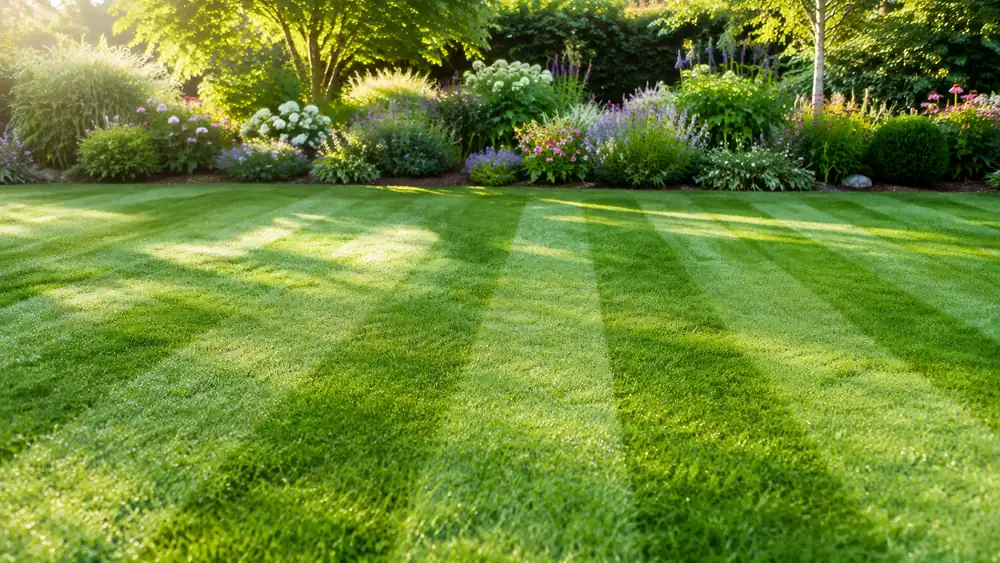
Most lawn care fails because it fights the calendar - fertilizing in summer heat, scalping in August, watering daily in spring. Grass grows in cycles, and every job has a season where it is nearly effortless and a season where it is wasted work. Follow the cycle and the lawn mostly takes care of itself.
Rake out winter debris and mow at your mower's second-highest setting for the first cuts. Fertilize once daytime temps hold above 60F - feeding too early grows lush top growth at the expense of roots. This is also the season for edging and fixing mower damage; a cordless mower with a sharp blade makes the season's first cuts clean instead of ragged.
Raise the mowing height a notch as heat arrives. Taller grass shades the soil, holds moisture and crowds out weeds - cutting higher is the single most effective weed control there is. Water deeply once or twice a week rather than daily sprinkles; an oscillating sprinkler or soaker hose in the early morning loses far less to evaporation. Never fertilize a drought-stressed lawn.
Fall is when cool-season lawns do their serious growing, and when the biggest jobs pay off best. Overseed thin areas in early fall so new grass establishes before frost. Core aerate if the lawn gets heavy use. Fertilize in mid-fall - this feeding drives root growth that carries through next summer. And keep mowing until growth stops; the final cut can be slightly shorter to prevent matting under snow.
Stay off frozen grass - footprints on frost-burned blades leave marks that last into spring. Get the mower serviced and the blades sharpened in the off-season; a dull blade tears grass tips and invites disease. Drain hoses and shut off exterior water. Then let the lawn sleep.
If the full schedule feels like too much, just do these: mow high, sharpen blades, and water deeply but rarely. Those three habits account for most of the difference between a struggling lawn and a thick one - and none of them take more than a few minutes.
A lawn is not a carpet to be trimmed - it is a field of plants to be managed. Manage the plants and the green follows.
The right equipment turns each season's jobs from chores into quick wins. A cordless mower with a sharp blade makes the twice-weekly summer mowing a 20-minute job instead of an afternoon. A string trimmer edges what the mower cannot reach. An oscillating sprinkler on a timer handles deep watering before you are awake. You do not need a shed full of equipment - a mower, a trimmer, a way to water deeply, and a sharp blade cover ninety percent of lawn care.
Most lawn complaints trace back to one of four causes:
If your lawn is starting from rough, do not try to do everything at once. Year one: mow high and water deeply - just those two habits. Year two: overseed in fall and fertilize on schedule. Year three: aerate if needed and fine-tune. Lawns improve in years, not weekends - but each season of correct care compounds, and by the third year the yard looks like it was always easy.
Our power equipment collection has the mowers and trimmers that make every season's work faster.
Overseeding fails for one reason: seed touches soil, or it does not. Mow short first, rake hard to expose soil, spread seed, and then keep it consistently damp for three weeks - the seed must never dry out while germinating. That constant moisture is the whole game; a simple timer and sprinkler setup turns a finicky chore into an automatic one. Done right in early fall, new grass fills thin spots before you have raked the last leaves.
Ready to get to work? Shop the collection - free US shipping, tax free.