How to Care for Garden Tools So They Last a Lifetime
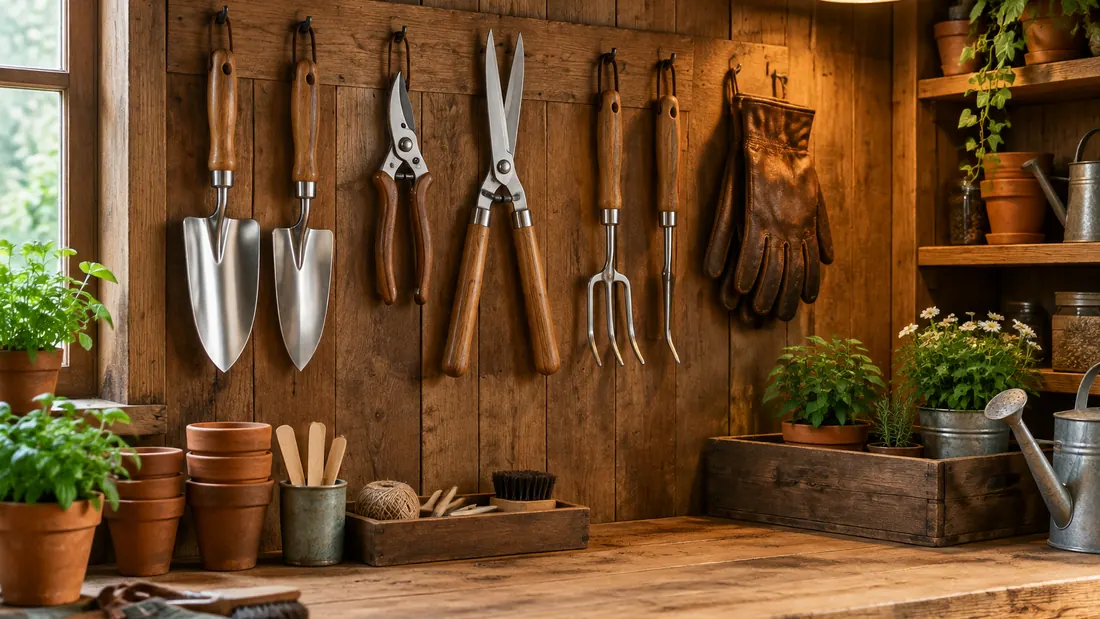
The difference between tools that last five years and tools that last fifty is not quality alone - it is ninety seconds of care after use. Knock soil off, rinse if needed, dry with a rag, hang it up. That is the whole routine. Stainless steel resists rust far better than carbon steel, but soil itself holds moisture against metal, so even stainless benefits from a quick wipe.
For caked-on mud, keep a bucket of water and a stiff brush by the door - scrub, rinse, dry. Never put tools away wet or damp. For sticky sap and pruning residue, wipe blades with rubbing alcohol or an oily rag; this also sanitizes the blade between plants, which matters when pruning anything disease-prone.
A sharp tool cuts; a dull one tears and pries, which damages plants and your joints. Sharpen at the end of the season, or whenever cutting starts to feel like chewing:
A drop of machine oil wiped across blades and pivots prevents rust and keeps pruners gliding. Wooden handles dry out, crack and splinter - rub them with linseed oil once or twice a year. The handle soaks in overnight and stays smooth for a season of hard use.
Tools piled in a bin rust each other and dull each other. Hang them on wall hooks in a shed or garage, blades down, where air circulates. A pegboard or a simple rail with hooks keeps everything visible and dry. If storage is damp, a bucket of dry sand mixed with a little mineral oil - plunge blades into it after use - cleans, dries and oils in one motion.
At season's end, do the annual service: clean everything thoroughly, sharpen cutting edges, oil metal, oil wooden handles, and check for loose screws or rivets. Replace or repair anything marginal now, in the off-season, rather than discovering it on the first busy Saturday of spring.
Take care of the tool and the tool takes care of the garden - ninety seconds after use is all it asks.
Surface rust on a neglected tool is not a death sentence. Scrub light rust with steel wool or a wire brush, wipe with an oily rag, and the tool returns to service. Prevention is cheaper: the sand-and-oil bucket trick (plunge blades into coarse sand mixed with mineral oil after use) cleans and protects in one motion. Tools stored dry, oiled and hung simply do not rust - even in humid climates.
Cordless gear needs different care than hand tools. Charge batteries at room temperature and store them around half charge - never empty, never blazing hot in a closed car. Brush grass debris off mower decks after each cut; caked grass holds moisture and invites rust. Check air filters and blade sharpness each season. Ten minutes of attention in the off-season means the first pull of spring starts right up.
A quality tool earns repair; a bargain tool rarely does. Replace the blade on pruners, the handle on a favorite hammer or fork, the battery on cordless gear - all cheaper than new. But a trowel that bent the first season or shears that never held an edge are better replaced with something honest. Buy quality once, maintain it, and the shed fills with tools you would not trade.
Our stainless steel hand tools are built for decades of service - see the hand tools collection.
Tool care fails when it lives in a manual nobody reads. Attach it to something you already do: the boot scrape by the door gets a wire brush and rag beside it, and the rule becomes 'nothing goes back on the rack dirty or wet.' A wall hook within reach of the door beats a perfect organizer in the basement - the easier the put-away, the more often it happens. Ninety seconds, every time, and the tools simply never decline.
Ready to get to work? Shop the collection - free US shipping, tax free.