Composting for Beginners: Turn Scraps into Garden Gold
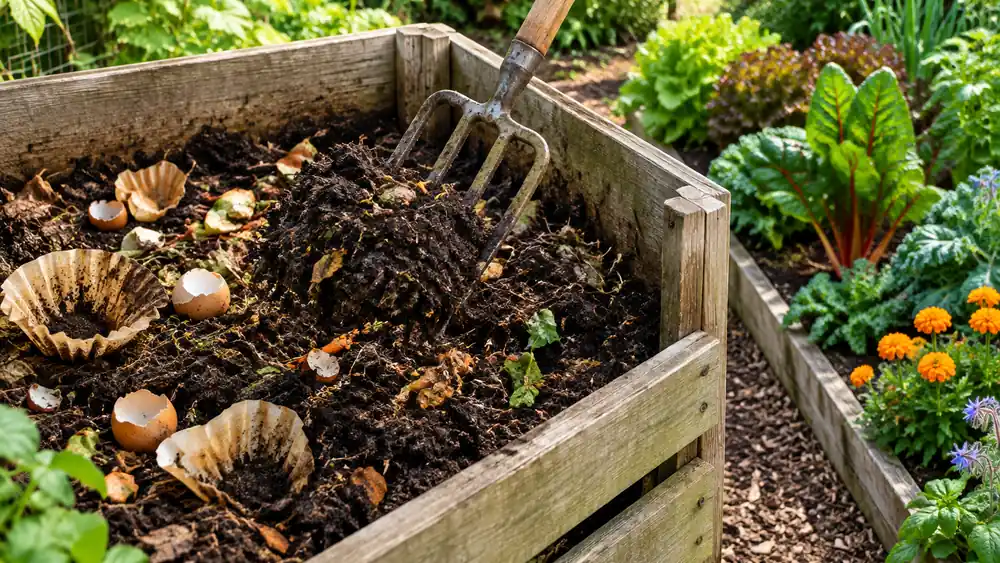
Food scraps and yard waste make up roughly a third of household trash; composting turns that stream into the single best soil amendment money cannot buy. Compost feeds soil life, buffers pH, holds moisture in sandy soil, loosens clay, and quietly fixes most of the problems a soil test reveals. Store-bought fertilizer feeds plants; compost feeds the ground they live in.
Compost is a balance of greens (nitrogen-rich, usually moist) and browns (carbon-rich, usually dry). Aim for roughly one part greens to two or three parts browns by volume. Too many greens and the pile turns slimy and smelly; too many browns and nothing happens for a year.
Any container that holds material together and drains works. A tumbling composter makes turning easy and keeps pests out - ideal for suburbs and small yards. An open wooden bin holds more and suits bigger gardens. Even a simple pile works if space is no issue. Location matters more than style: half sun, good drainage, and close enough that you actually walk scraps out in January.
Compost needs air and moisture more than attention. Turn the pile every week or two - a pitchfork is fine, a tumbler makes it ten seconds. The pile should feel like a wrung-out sponge: damp, never soggy. If it smells, add browns and turn. If nothing is happening after weeks, add greens and water. A well-managed pile finishes in two to three months in summer.
Finished compost is dark, crumbly and smells like a forest floor. Sift it if you want a fine texture for seed starting; use it rough everywhere else. Work an inch into vegetable beds each season, use it as mulch around perennials, or brew it into compost tea for a gentle liquid feed. You will never bag your leaves again.
Composting is the garden's way of teaching patience - in exchange for scraps and stillness, it hands you back next spring's harvest.
There are two valid styles. Fast composting - chop everything small, balance greens and browns carefully, turn weekly, keep moisture perfect - produces finished compost in eight to twelve weeks. Patient composting - pile it up, add materials as they come, turn when you remember - takes six months to a year and produces equally good compost. Choose based on temperament, not results; the patient pile wins on effort, the managed pile wins on timing.
Every compost problem has a simple fix:
Once the basic pile is running, two easy upgrades multiply the yield. Compost tea - a shovelful of finished compost steeped in water overnight - makes a gentle liquid feed for seedlings and containers. Vermicomposting (worm bins) handles kitchen scraps indoors year-round and produces castings that are pure gold for seed starting. Neither replaces the pile; both complement it.
Our composting gear and garden care collection makes starting easy - grab a bin and begin this weekend.
No yard? Composting still works. A sealed tumbling bin on a patio handles a household's scraps with zero smell if you balance greens and browns. A worm bin under the kitchen sink processes a couple of pounds of scraps a week in the space of a suitcase. Bokashi fermentation - a sealed bucket with bran inoculant - even handles meat and dairy, and its pickled output finishes in a conventional pile or a hole in the ground. Small space, same result: scraps become soil.
Garden centers sell bagged compost by the cubic foot; a season of home composting produces it by the cubic yard, for the cost of a bin and a pitchfork. Beyond the money, the quality gap is real: home compost is biologically alive, teeming with the fungi and microbes that make soil fertile, while bagged product has often sat sterilized on a pallet for months. Use yours generously - an inch on beds each season, mixed into planting holes, brewed as tea - and watch the soil darken year by year.
Ready to get to work? Shop the collection - free US shipping, tax free.